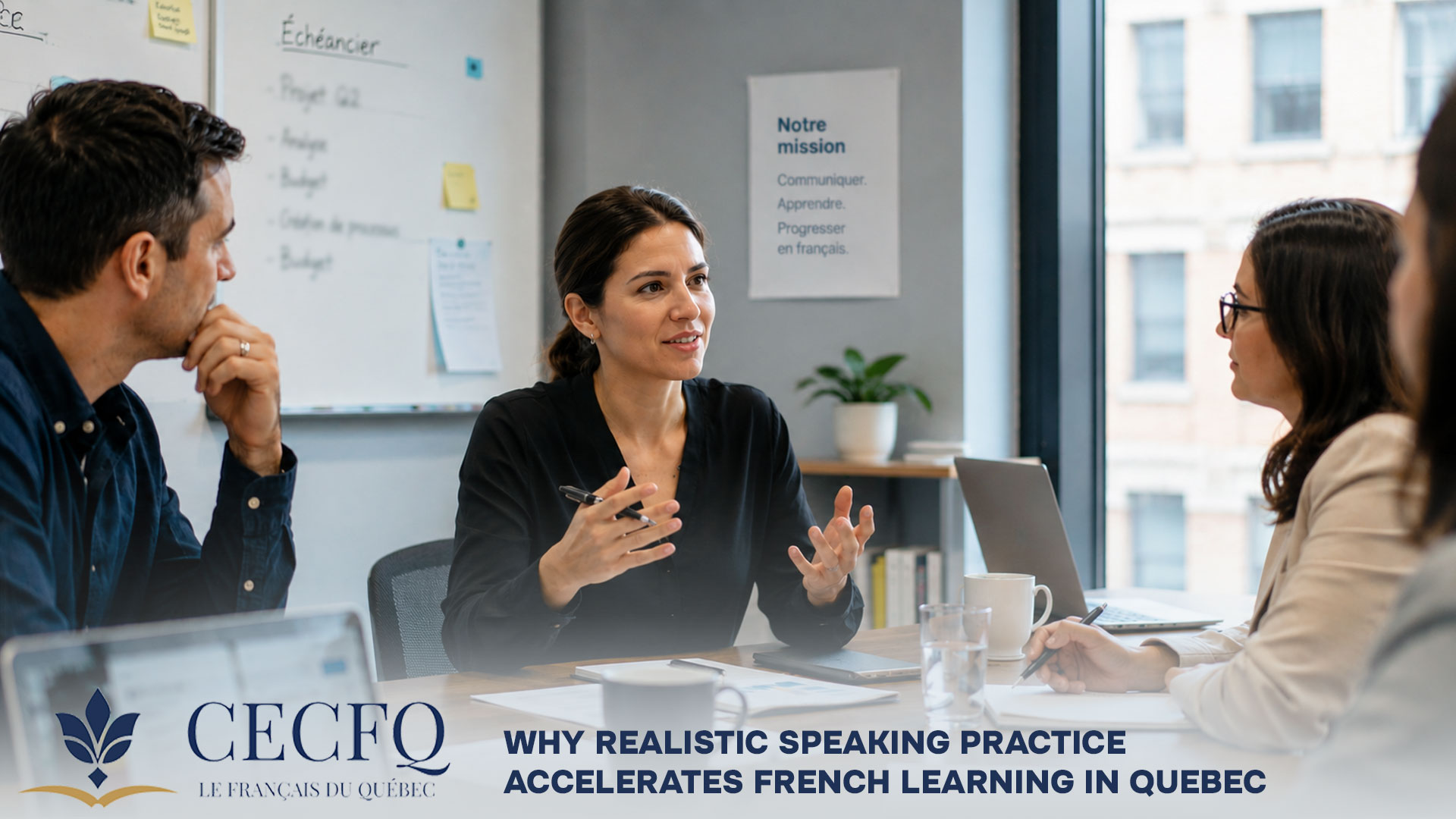
Many adult learners in Quebec understand more French than they can comfortably speak. They may complete grammar exercises and memorize vocabulary, but still hesitate in meetings, phone calls, appointments, or everyday conversations.
Realistic speaking practice helps bridge that gap by training learners to react naturally, improve listening comprehension, and build confidence in situations they actually face in Quebec.
For adults living, studying, or working in the province, this type of active communication practice often helps learners develop practical fluency more efficiently than passive study alone. Understanding how conversation practice, oral communication, and situational speaking work together explains why progress becomes faster and more durable.

Benefits of French Conversation Practice
Realistic conversation practice helps adults retrieve vocabulary faster, respond more naturally, and recover when they forget a word.
Because the situations mirror daily life in Quebec, learners also build confidence for workplace meetings, public services, daycare calls, and other routine interactions. These tasks build practical language habits, not isolated knowledge.
Everyday Oral Interaction
Short daily speaking tasks are often more effective than long weekly theory sessions.
Even ten to fifteen minutes of guided oral interaction can improve automatic responses, comfort with natural spoken speed, and turn-taking.
Quebec-Specific Communication Skills
Quebec French includes common expressions, rhythms, and speech patterns not always found in textbooks. Practice based on local reality improves comprehension and reduces the shock of authentic interaction, especially for learners exploring official French-learning options in Quebec
| Practice type | Main benefit | Typical Quebec use |
| Textbook dialogues | Controlled accuracy | Beginner review |
| Realistic role-play | Faster response time | Services, work, daily life |
| Guided live conversation | Better fluency and confidence | Meetings, interviews, integration |
The Core Benefits of Realistic Speaking Practice
Fluency often improves when learners rely less on word-for-word mental translation and begin reacting more directly in French. Realistic speaking pushes them to process meaning directly, which is essential for speaking French fluently locally.
Real conversation includes interruptions, clarifications, informal wording, and unpredictable questions. A learner only practicing scripted sentences may perform well in class but struggle with a daycare registration call or workplace discussion.
Interactive speaking also helps learners recover more naturally when they forget words or misunderstand something. Instead of stopping when they forget a word, learners learn to reformulate, ask for repetition, and keep the conversation moving. This skill is a major fluency marker in real Quebec interactions.
- Faster Word Recall: The more you use familiar vocabulary in spontaneous speech, the faster you can access it, reducing hesitation.
- Reduced Communication Anxiety: Confidence follows repeated success. Rehearsing real situations, like daycare calls or doctor’s appointments, can lower fear.
- Natural Error Recovery: Instead of freezing when forgetting a word, interactive practice teaches you to reformulate, ask for repetition, and keep the conversation moving.
Oral Communication Skills for Adult Learners in Quebec
Adult learners often benefit when speaking practice reflects the goals they actually have in Quebec. Someone preparing for employment in the province needs different oral communication skills than someone preparing for parent-teacher meetings or immigration interviews.
Adults retain language better when they can connect it immediately to their personal, professional, or administrative life.
Practical speaking tasks also help learners notice gaps more clearly. During a real exchange, they quickly see if they need better pronunciation, more connectors, stronger question forms, or better listening strategies.
Functional Speaking Tasks
Effective tasks include requesting clarification, giving short explanations, describing experience, handling disagreement politely, and following spoken instructions. These functions appear constantly in Quebec daily life.
Feedback in Real Time
Immediate correction after authentic speech is often more useful than correction after isolated drills. Learners connect feedback directly to a communicative need they just experienced.
| Learning focus | Traditional approach | Realistic speaking approach |
| Vocabulary | Memorized lists | Used in real contexts |
| Grammar | Written exercises | Spoken problem-solving |
| Confidence | Delayed | Built through repeated interaction |
How Listening and Speaking Improve Together
Speaking and listening develop together. Active conversation practice improves French listening as learners begin to expect natural speech patterns, reduced forms, and conversational speed.
When learners participate in authentic exchanges, they become better at understanding reduced speech, intonation, and context, while also improving their ability to answer quickly and clearly.
This is why realistic speaking often accelerates learning more effectively than passive exposure alone.
Accent and Rhythm Adaptation
Learners do not need to erase their accent, but they do need to understand local rhythm and common pronunciation shifts. Frequent exposure to authentic interaction helps build this adaptability.
Interactive Comprehension
A major advantage of speaking practice is that learners can verify understanding immediately. They ask, confirm, repeat, and negotiate meaning, reinforcing both listening and speaking.
Online French Immersion for Adult Learners
Many adult learners cannot access full in-person immersion every day. Realistic online speaking has become a practical way to recreate immersion-like conditions for those balancing work, family, and settlement in Quebec.
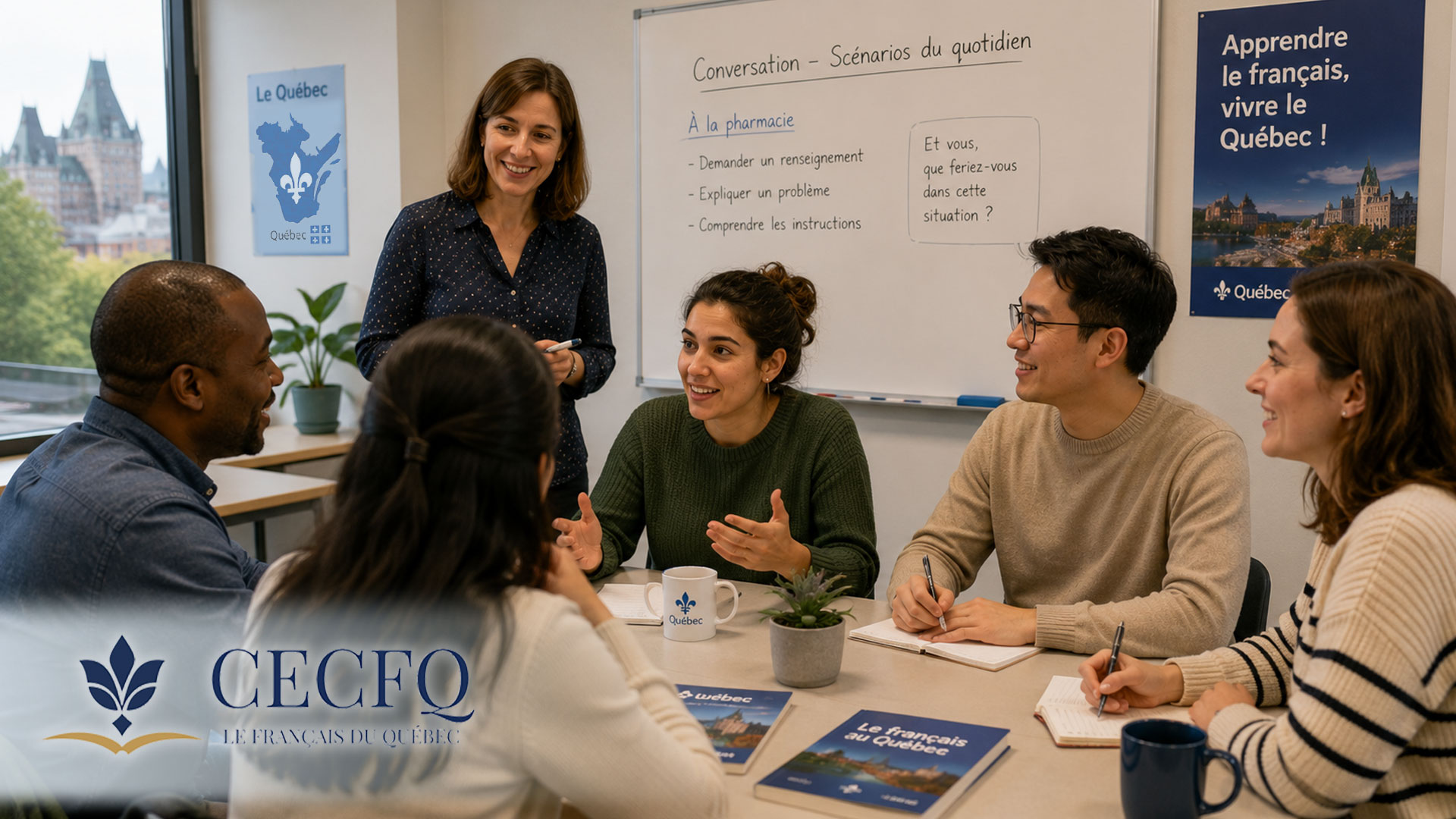
French immersion online works best when sessions simulate real pressure and real purposes. Simple conversation helps, but scenario-based speaking is more effective: job interviews, customer interactions, administrative appointments, team discussions, and informal social talk.
This format accelerates French learning by combining repetition with variation. Learners revisit core structures, but each exchange changes enough to stay realistic.
Scenario-Based Learning
Role-plays based on Quebec reality build transferable skills. Learners practice not just what to say, but how to react when the conversation shifts unexpectedly.
Consistent Oral Exposure
Frequent online speaking helps maintain momentum. Adults often progress faster with regular speaking contact than with occasional intensive study followed by long breaks, including those enrolled in official full-time programs for immigrants
2 Real Cases:
Case 1: Newcomer professional struggling in meetings.
A newcomer professional in Quebec had strong reading skills but struggled in meetings. The issue was slow oral response under pressure, not grammar knowledge. After practicing realistic workplace speaking scenarios, including clarifying points and summarizing ideas, participation improved and the learner began contributing more confidently.
Case 2: Adult learner avoiding phone calls and public-service interactions
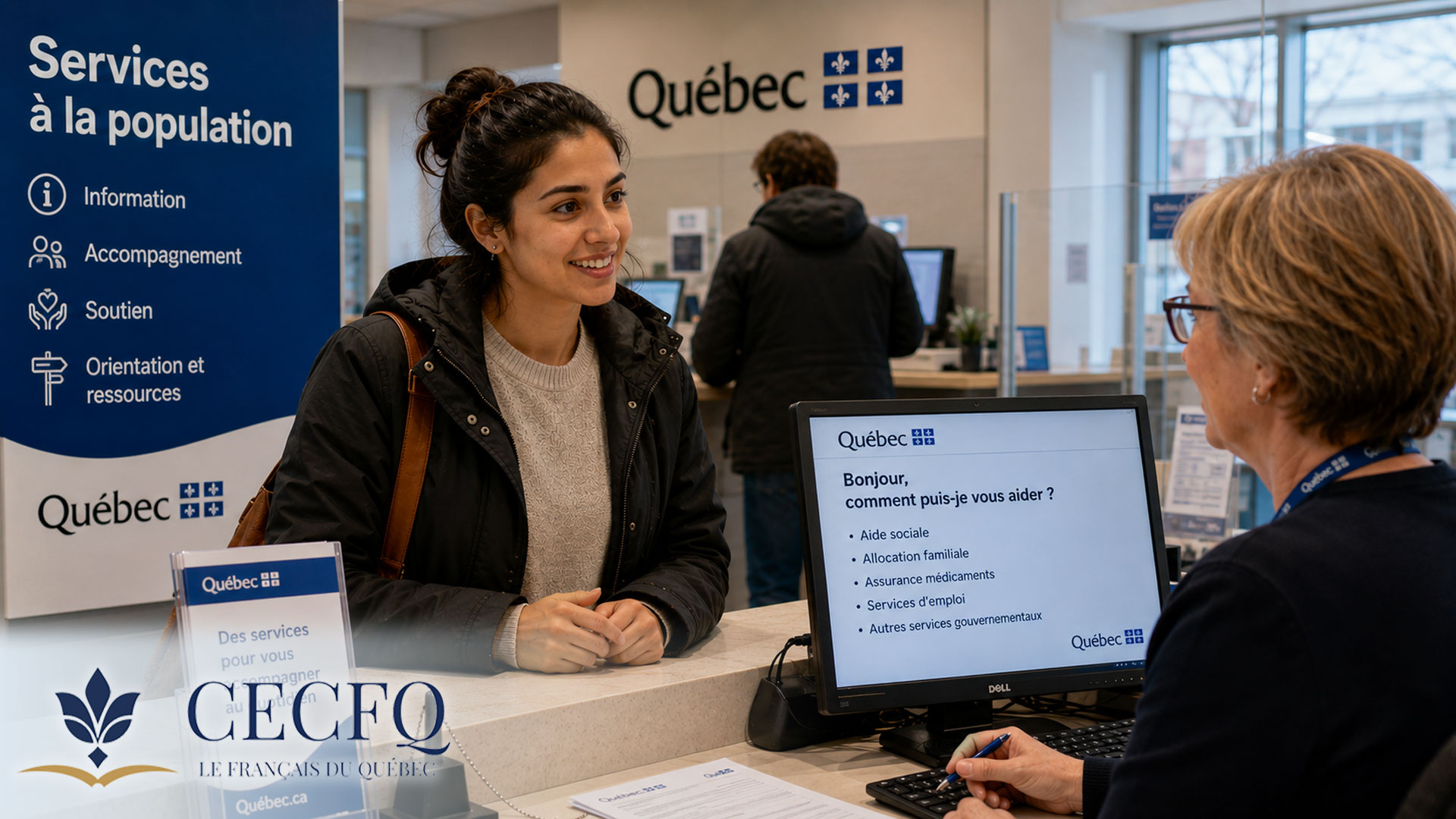
Another adult learner preparing for everyday integration could complete written exercises but avoided phone calls and public-service interactions. The solution was targeted speaking practice using common Quebec situations: making appointments, asking follow-up questions, and handling misunderstandings. Over time, the learner reported faster reactions, better comprehension, and less anxiety in routine conversations.
FAQ
Why does realistic speaking practice accelerate French learning in Quebec?
It trains learners to use French under real conditions. They retrieve vocabulary faster, adapt to Quebec speech patterns, and build practical confidence.
Is conversation practice more effective than grammar study for Quebec French?
Grammar is useful, but conversation practice helps learners apply it in real time. The fastest progress often combines both.
How often should adults practice spoken French for Quebec integration?
Short, frequent sessions are often best. Daily or near-daily speaking usually leads to better retention and fluency than occasional long sessions.
Does realistic speaking help with French exams for Quebec residency?
Yes. Oral interaction improves spontaneity, listening, and response structure, supporting exam performance, especially in speaking components.
Can online French conversation practice still prepare learners for real Quebec situations?
Yes, if it uses authentic scenarios, live feedback, and Quebec-based tasks. The key elements are relevance and interaction, not just screen time.
Disclaimer: This article is provided for general informational purposes only and does not constitute educational, immigration, or legal advice. French-learning outcomes vary depending on prior language experience, speaking frequency, immersion level, and individual learning goals. Program availability and eligibility requirements in Quebec may change over time.
Ready to Speak French with Confidence in Quebec?
Stop letting the fear of making mistakes hold you back at work or in daily life. At CECFQ, our scenario-based learning approach places you in realistic, practical situations – from workplace meetings to administrative appointments – so you can build real-world fluency faster.
Book your Free Consultation today to discuss your goals. We will match you with a tailored conversation program that transforms your passive knowledge into active, confident speaking.