

Choosing how to learn a language is often harder than choosing the language itself. Adult learners hear conflicting advice: apps for self-study, large classes for structure, or small groups for speaking practice.
However, no single format fits every goal. The best option depends on your needs: flexibility, correction, speaking time, motivation, exam prep, or steady progress. In Quebec, many adults also supplement their learning through official pathways provided by the Gouvernement du Québec, ensuring their progress aligns with provincial integration goals.
This guide compares self-study, large groups, and small classes practically. It highlights research, adult learning patterns, and real experience for 2026.

Language learning methods for real progress
When people search for the best language learning methods, they want a clear answer. In reality, the most effective format matches the learner’s objective, schedule, and feedback needs.
Recent 2026 adult learning reports and EdTech summaries show a pattern: self-study tools are common, but completion rates drop without live accountability. Instructor-led formats yield more consistent progress, especially for speaking accuracy and long-term motivation. These findings align with the standards set by France Éducation international (FEI), the global authority for French language diplomas, which emphasizes the balance between linguistic knowledge and communicative competence.
Self-study strengths
Self-study excels at vocabulary building, listening exposure, review, and flexible scheduling. It suits disciplined, independent learners comfortable with self-correction.
It’s useful for beginners and lower-intermediate learners memorizing phrases and maintaining daily language contact. Apps, podcasts, videos, and grammar platforms support this well. While effective for beginners, these tools are designed to meet the initial levels of the Common European Framework of Reference for Languages (CEFR), but they often lack the depth needed for advanced fluency.
Self-study limits
The main weakness is delayed or missing correction. Many adults understand more than they can produce, letting errors in pronunciation or structure become habits.
Self-study also makes overestimating progress easier. Learners may recognize words in an app but struggle in live conversations or exams.
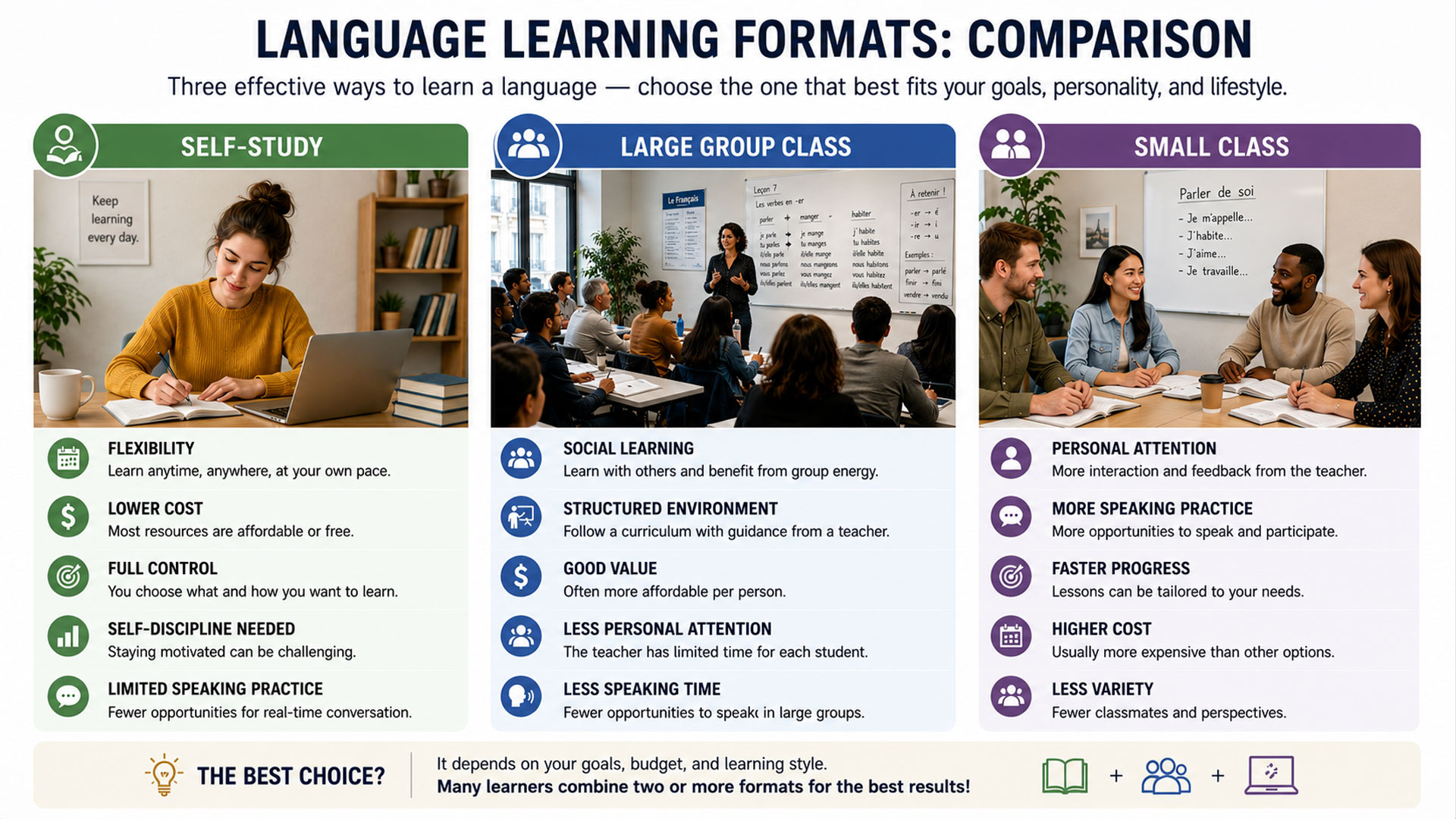
| Format | Main advantage | Main limitation |
| Self-study | Flexibility and low cost | Limited correction and accountability |
| Large groups | Structure and community | Less individual speaking time |
| Small classes | Feedback and interaction | Requires scheduling commitment |
Group language classes impact on speaking gains
Group language classes are a common choice for adult education. They offer structure, a regular schedule, and exposure to varied accents and questions.
Large groups work well when the main goal is guided curriculum progression. They benefit learners needing routine, deadlines, and social motivation.
What large groups do well
Larger classes often bring energy. Learners hear multiple mistakes, explanations, and examples, reinforcing grammar and vocabulary beyond self-study.
Large groups also reduce isolation. For adults balancing work, family, and integration, attending a regular class supports consistency better than studying alone.
Where large groups fall short
The primary issue is limited speaking time per person. With 12 to 18 learners per session, each person may speak briefly, especially in mixed-level groups.
Correction is also less targeted. Teachers must address the whole class, so quieter learners or those with specific pronunciation issues may not get enough personalized feedback.
Small language classes for faster practice
For many adults, small language classes offer the best balance of structure and participation. They combine live instruction with enough speaking time for meaningful correction. This format is the foundation of our small group evening courses, where the focus is entirely on active participation.
This format is effective for conversational confidence, pronunciation work, interview prep, and speaking tasks requiring spontaneous production. Learners are seen and heard more often, making progress easier to measure.
Why small classes feel more effective
In a small group, each learner speaks more often and gets more direct correction. Language development relies on input, output, and feedback.
Adults also tend to ask more questions in smaller settings, leading to clearer understanding of grammar, word choice, and real-world usage.
Best fit for intermediate learners
Small classes suit learners who know some basics but need to activate the language. This applies to immigrants, international professionals, and adults returning to study.
These learners benefit most when they can test language in conversation, make mistakes, and refine their speech immediately.
| Learning goal | Most effective format | Why |
| Daily exposure | Self-study | Easy to repeat often |
| General structured progress | Large groups | Regular syllabus and routine |
| Speaking confidence | Small classes | More interaction and correction |
| Exam speaking prep | Small classes | Targeted practice under guidance |
| Independent review | Self-study | Flexible reinforcement |
Best way to learn a language for adult goals
The best way to learn a language depends on the outcome, not just preference. Someone preparing for an interview needs a different format than someone learning for travel.
For adult learners, the strongest results often come from combining formats. Self-study supports repetition, while live classes provide accountability and feedback.
If your goal is conversation
Small classes are usually the most effective starting point. They create repeated speaking opportunities and immediate correction, which are hard to replicate with apps.
Self-study can reinforce vocabulary and listening between sessions. Large groups help, but progress may be slower if speaking time is limited.
If your goal is an exam
Exam preparation often requires guided practice with task types, timing, and correction criteria. Self-study aids revision, but most candidates improve faster with teacher feedback.
Large groups can help with strategy and routine. Small classes are better for exams with speaking or writing tasks needing personalized correction. To gain a competitive edge in your preparation, it is crucial to understand exactly how DELF/DALF examiners evaluate your performance. In small classes, teachers can use these official marking grids to pinpoint your specific weaknesses and guide your practice effectively.
If your goal is long-term consistency
Large and small classes often outperform pure self-study for adult accountability. However, self-study remains essential as a support habit.
The most sustainable pattern is typically live guided sessions plus short independent review during the week.

Online language learning and format choice
Online language learning has transformed these formats. In 2026, self-study tools are advanced, virtual large groups are common, and small online classes offer strong interaction without travel.
The key question is whether the learning format creates enough repetition, correction, and active use.
When online self-study works
Online self-study suits busy adults who maintain routines. It is effective for micro-learning, review, and exposure during breaks or evenings.
However, digital convenience doesn't solve the feedback issue. Without speaking practice and correction, progress often remains passive.
When online classes work better
Online large groups are practical and accessible, but still have participation limits. Online small classes often perform better due to easier breakout work, teacher attention, and turn-taking management.
For adults preparing to use French at work or in education, this format is efficient for targeted practice with realistic situations.

2 Real Cases
Case 1: Overcoming the Self-Study Speaking Barrier
An adult preparing for professional French relied mainly on self-study apps. Vocabulary recognition improved, but live speaking stayed hesitant and inaccurate. Switching to a small class format with regular correction significantly boosted speaking confidence and response speed within weeks.
Case 2: Boosting Oral Fluency with a Blended Approach
A learner in a large group enjoyed the structure but progressed slowly in oral interaction. By combining the class routine with shorter, smaller-group speaking sessions, the learner improved participation, pronunciation, and exam-style responses more effectively.
FAQ
Does self-study work for language learning?
Yes, especially for vocabulary, listening, and review. It's less effective alone for speaking accuracy, correction, and accountability.
Are large language classes effective?
They provide structure, routine, and broad exposure. They are less effective for learners needing extensive individual speaking time.
Why do small classes often produce better speaking results?
Learners speak more, receive faster correction, and ask more questions. This fosters stronger active language use.
What is the best format for adult learners?
For many adults, a blended approach works best: self-study for repetition, and small or structured group classes for feedback and consistency.
Which format is best for French exam preparation?
Small classes are often strongest for speaking and writing correction. Self-study helps with revision, timing practice, and memorization.
Find Your Most Effective Learning Format in Quebec
Choosing how to learn is just as important as deciding to start. Whether you need the structured feedback of a small class or a blended approach to fit your busy schedule, CECFQ specializes in practical French education tailored for adults.
Stop guessing which method works best for your immigration, work, or daily life goals.
Book a Free Consultation and Level Assessment today to speak with our pedagogical team. We will analyze your needs and place you in the exact learning format that will accelerate your fluency.
Disclaimer: While the comparisons in this article reflect current pedagogical research and general adult learning trends in 2026, language acquisition is highly personal. The effectiveness of any learning format depends on your starting level, native language, learning style, and personal commitment. Always consult with a pedagogical advisor to find the best approach for your specific goals in Quebec.