DELF DALF Examiner Training is Essential
In 2026, the DELF-DALF network remains the global standard for French language certification. To maintain this standard, France Éducation international (FEI) requires all examiners to undergo rigorous habilitation. For teachers in Quebec and across Canada, this is not just a certification but a professional milestone that aligns classroom teaching with the latest CEFR (CECRL) updates.
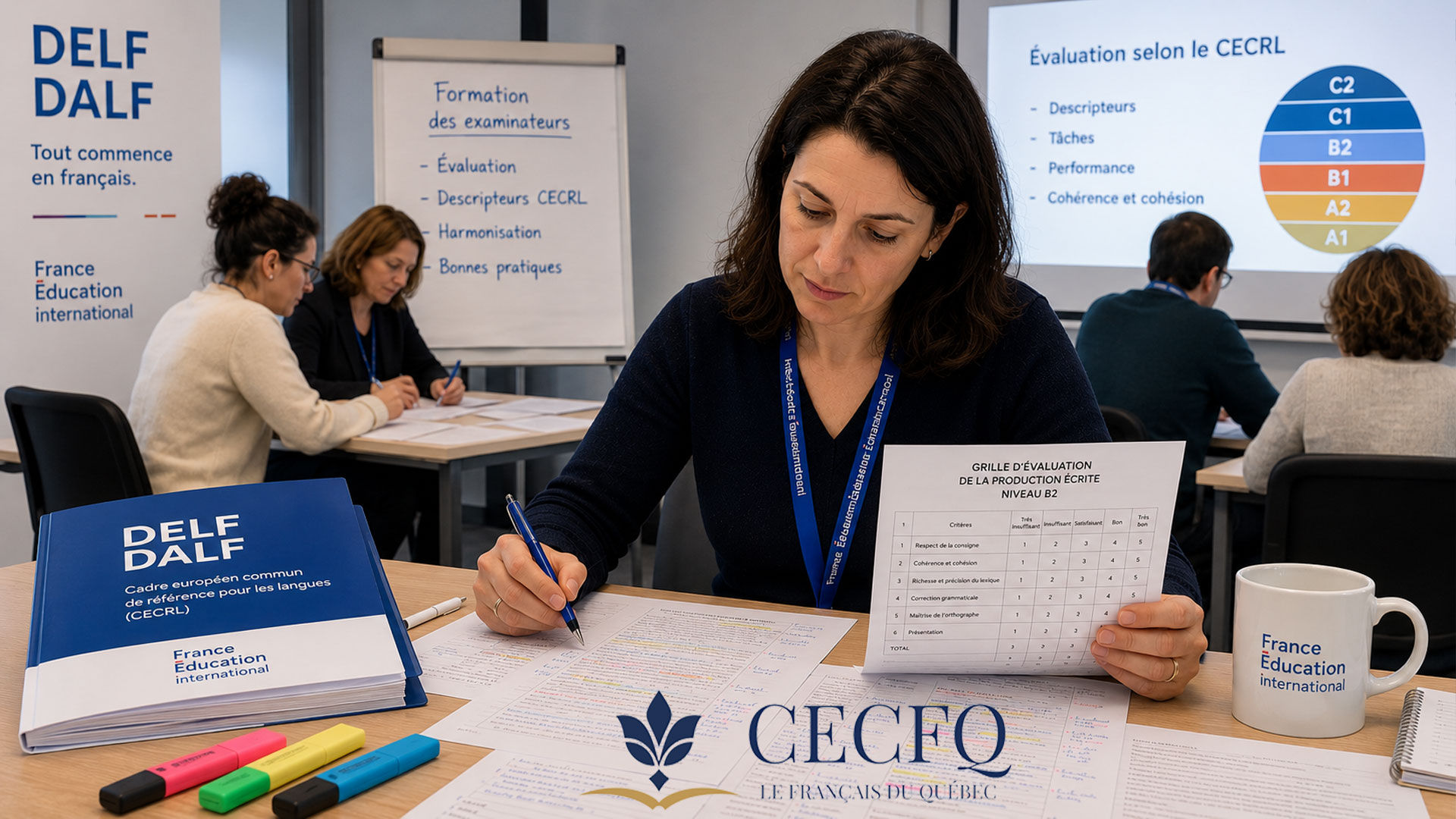
Training standardizes assessment. Candidates learn to apply descriptors, justify scores, and use official grids for written and oral production. This ensures reliability for the internationally recognized DELF and DALF diplomas.
Approved training typically targets teachers of French as a foreign or second language. Professionals in Quebec often come from adult education, immigration support, or exam preparation backgrounds.
Examiner Certification Pathway
As an official testing centre in Quebec, CECFQ ensures that applicants meet the specific professional standards required for the Canadian educational landscape.
We offer in-person, official DELF-DALF examiner certification training (A1–C2) that prepares you to assess speaking and writing performances according to France Éducation international standards.
Habilitation Validity Rules
Habilitation is valid for 5 years. A habilitation obtained through the FEI framework is generally recognized within the DELF-DALF network, but actual examining opportunities depend on the accreditation and administrative rules of each centre.
| Requirement area | What it usually involves | Why it matters |
| Teaching profile | Experience teaching French learners | Ensures understanding of learner performance |
| Official training | Participation in approved sessions | Standardizes marking practices |
| Validation | Successful calibration tasks | Confirms scoring consistency |
DELF Habilitation Process Confirms Official Standards
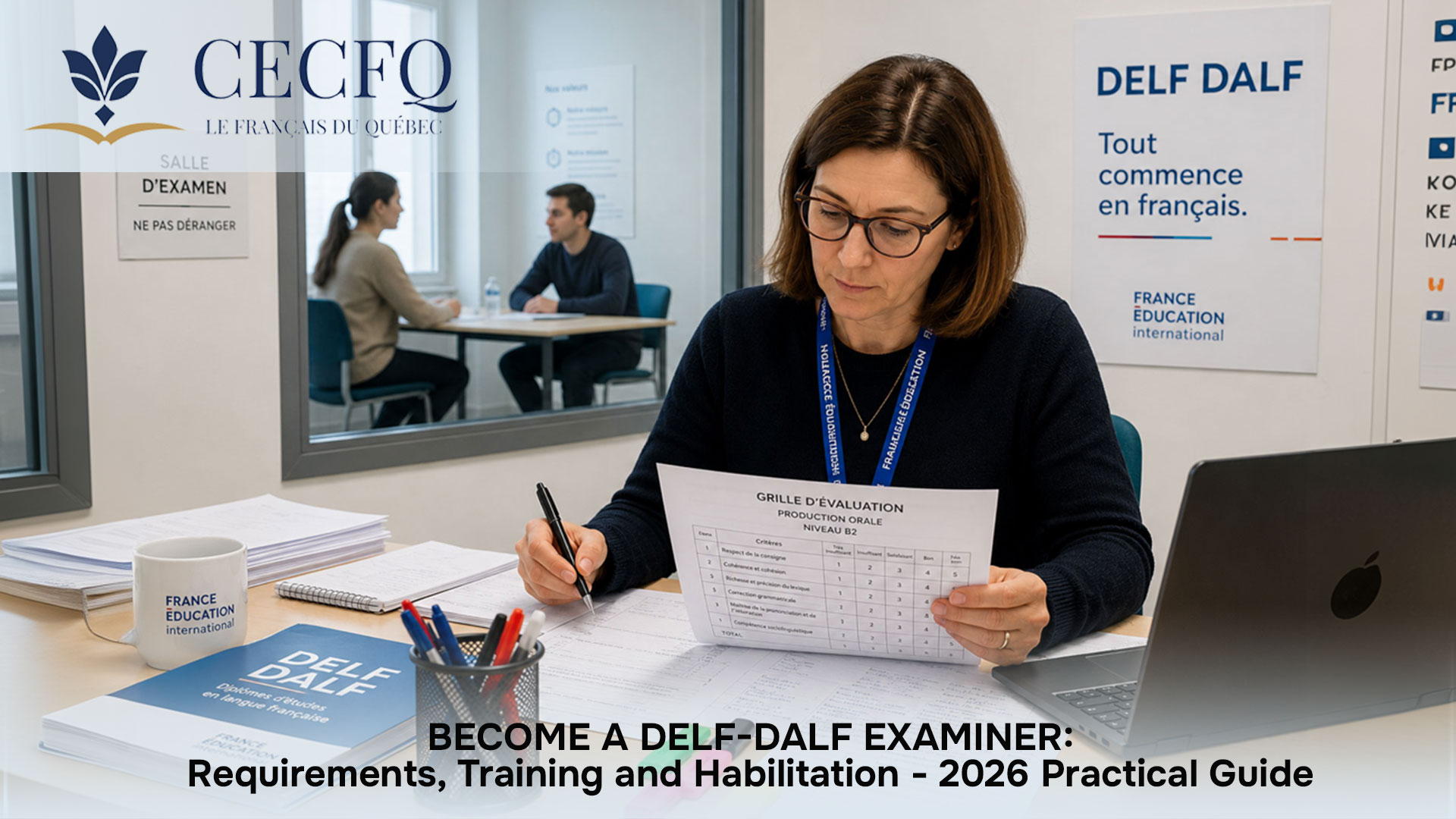
The DELF habilitation process is a controlled authorization. It confirms a teacher can assess according to official standards, not just personal classroom habits.
Habilitation follows training led by certified trainer-habilitators. Participants analyze sample scripts, compare ratings, discuss borderline cases, and practice oral interview procedures. The goal is inter-rater consistency.
Habilitation is often time-limited. Renewal may be required if an examiner has insufficient session participation or if guidelines change.
Initial Authorization Steps
Applicants often submit CVs, teaching credentials, and proof of experience. At CECFQ, we prioritize candidates who demonstrate a deep understanding of the Quebec French language standards and have practical experience in exam preparation courses.
Renewal and Reactivation
Lapsed authorization may require retraining. Procedures vary by country and examination centre. Verify local frameworks to ensure active status.
If your 5-year habilitation is about to expire, CECFQ provides a fast and convenient online DELF certification renewal training (A1-B2) to help you maintain your eligibility for upcoming exam sessions without interrupting your schedule.
DELF DALF Requirements for Professional Eligibility
Becoming a DELF DALF examiner primarily involves professional and pedagogical qualifications. While degree requirements can vary, authorized centres expect a strong background in teaching French language learners.
Degrees in French studies, linguistics, education, or applied languages are relevant. Practical teaching experience is equally important. Centres need examiners who understand learner errors, CEFR progression, and task-based assessment.
DALF levels often have higher expectations due to the need for finer judgment at advanced proficiency. Assessing C1 or C2 argumentation requires different skills than beginner communication tasks.
Academic Background
In the Canadian context, organizers look for a Degree in French Education (FLS/FLE), Linguistics, or a DAEFLE. Experience with the ‘Échelle québécoise des niveaux de compétence en français’ is a significant asset for local integration.
Teaching Experience
Training organizers often prefer applicants with exposure to various CEFR levels. Experience in exam preparation is beneficial but not always mandatory.
| Level group | Typical examiner profile | Assessment focus |
| DELF A1-A2 | Teachers of beginner learners | Basic interaction and simple writing |
| DELF B1-B2 | Teachers with intermediate exam knowledge | Task achievement and discourse control |
| DALF C1-C2 | Advanced-level specialists | Argumentation, precision, and register |
DELF Corrector Examiner Role in Assessment
The DELF corrector-examiner role often combines distinct functions. In practice, oral production is assessed by habilitated examiners, while written production is corrected by habilitated correctors, according to the official framework. In some cases, the same habilitated professional may be authorized for both roles.
This distinction impacts training. Oral assessment involves interview management, timing, and candidate interaction. Written correction requires script calibration, annotation logic, and adherence to score grids.
Understanding logistics is also key. Examining occurs during fixed sessions coordinated by accredited centres, emphasizing deadlines, confidentiality, and procedural consistency.
Oral Assessment Duties
Examiners must follow the official protocol strictly. They cannot add questions or alter timing to assist a candidate.
Written Marking Duties
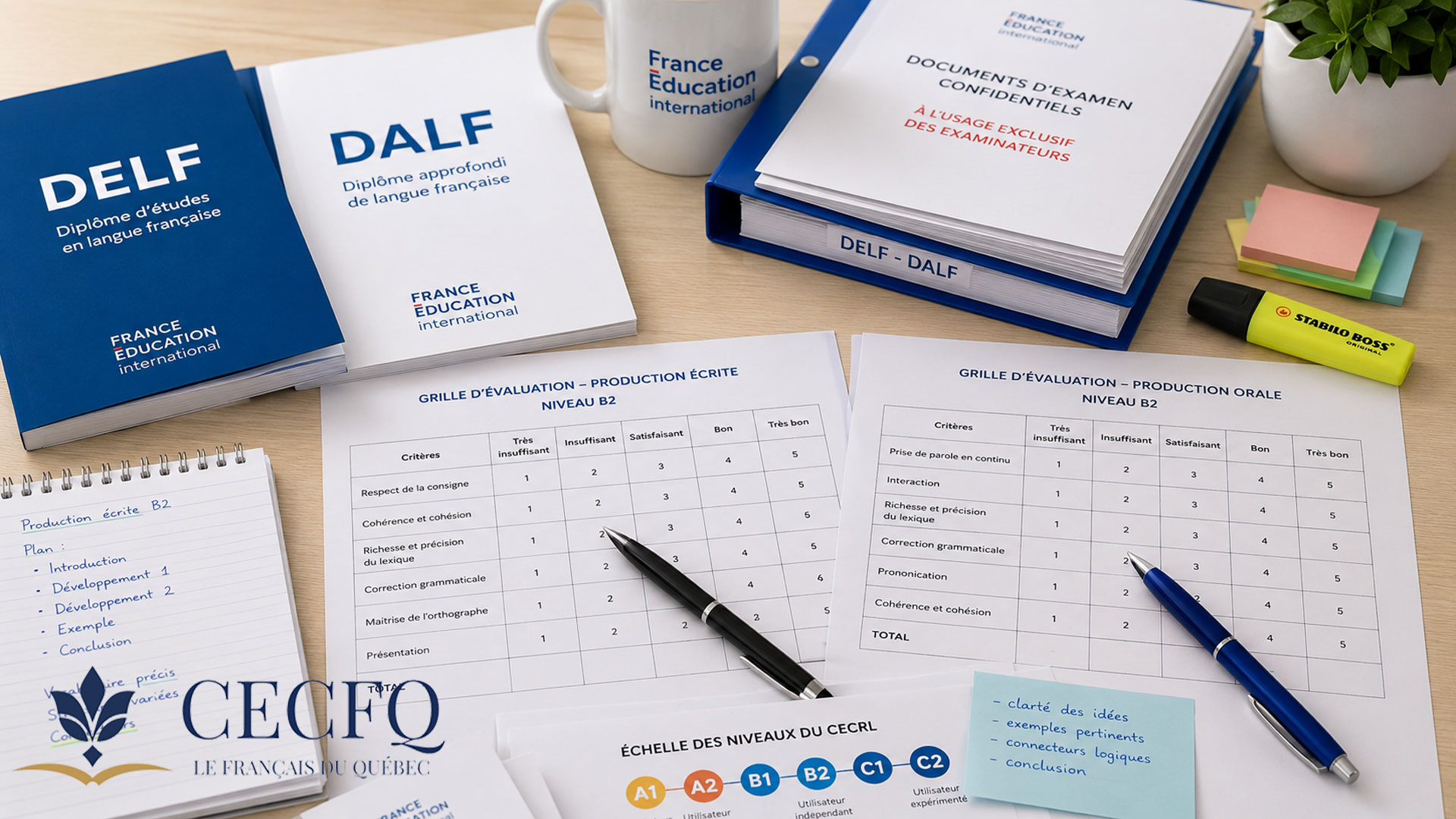
Correctors must apply descriptors consistently and justify marks. Decisions must reflect the rubric, not personal impressions.
CEFR Assessment Criteria in DELF DALF Evaluation
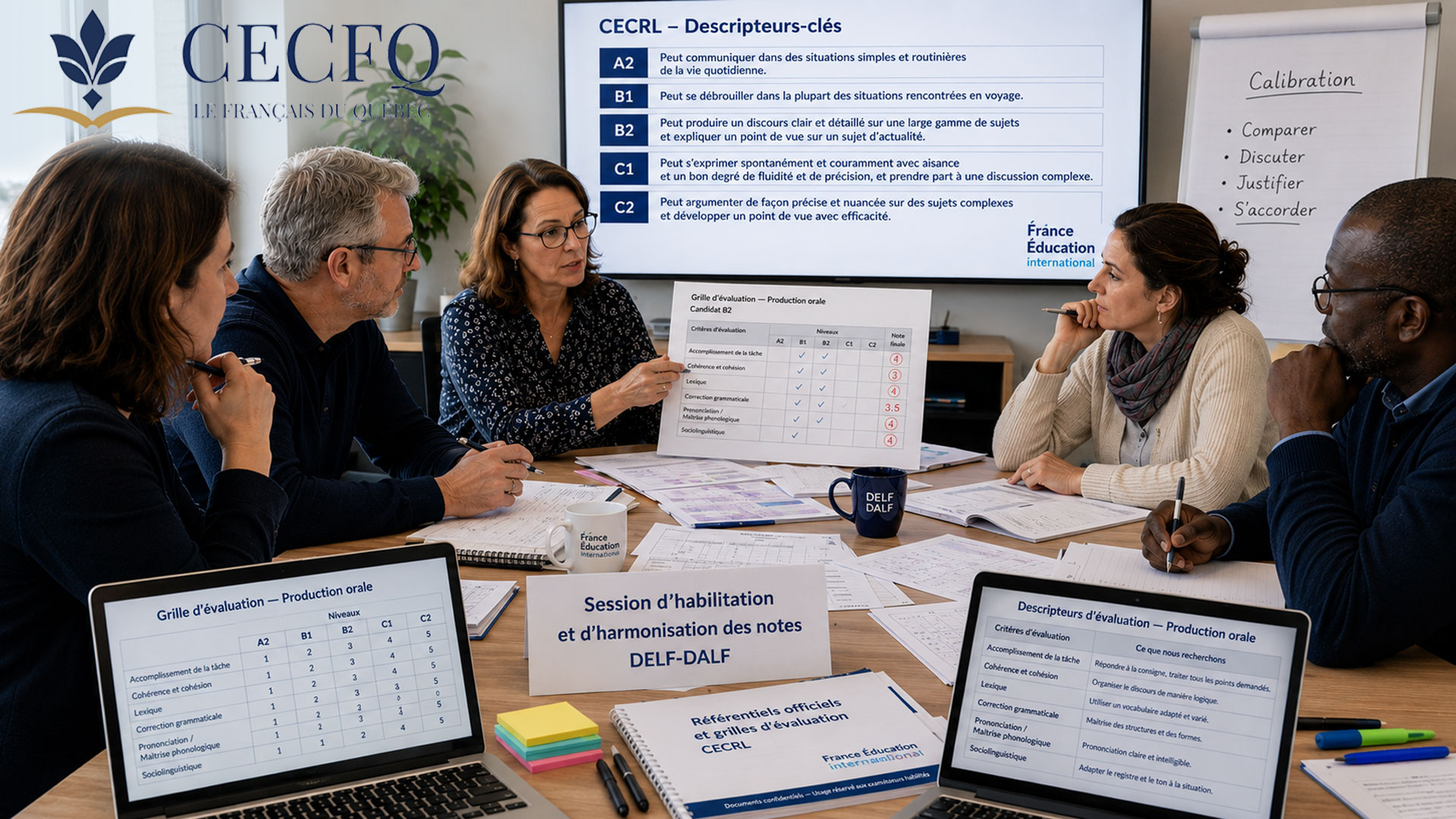
The CEFR assessment criteria are fundamental to DELF and DALF evaluation. Potential examiners must demonstrate stable, evidence-based interpretation of descriptors.
For speaking and writing, this involves analyzing task completion, coherence, vocabulary range, grammatical accuracy, sociolinguistic appropriateness, and pronunciation or spelling. Training shifts judgment from intuitive teaching to standardized exam assessment.
This is crucial in 2026 as more adults pursue these diplomas for mobility and professional requirements. Fair evaluation depends on calibrated CEFR interpretation, not local classroom standards.
Standardization Sessions
These sessions align scoring by comparing sample performances. Initial disagreements are normal; calibration reduces variability.
Common Rating Mistakes
Frequent errors include overvaluing fluency, excessive accent penalization, or confusing task difficulty with performance quality. Training addresses these tendencies.
2 Real Cases:
Case 1: Adult French Teacher Moves into Official Assessment
A Quebec FSL instructor with years of online teaching experience sought to examine DELF sessions. Assuming classroom experience was sufficient, the teacher instead completed approved training. After practicing with benchmark scripts, habilitation for DELF A1-B2 was obtained. This granted access to official examining work with a clearer understanding of CEFR scoring.
Case 2: Advanced-Level Specialist Seeks DALF Authorization
An experienced teacher preparing professionals for C1-level French possessed strong linguistic knowledge but lacked familiarity with DALF scoring grids. Through targeted habilitation training and calibration, the teacher learned to differentiate advanced performance bands more precisely. This enhanced both assessment reliability and classroom feedback.
FAQ
1. What qualifications do you need to become a DELF-DALF examiner?
Typically, a relevant background in French teaching, experience with language learners, and acceptance into an approved training and habilitation process are required.
2. Is DELF examiner training the same everywhere?
No. The overall framework is standardized, but application procedures, scheduling, and renewal practices vary by accredited centre or country.
3. Can any French teacher become a DELF corrector?
Not automatically. Teachers usually need official training and validation before they can correct or examine in recognized sessions.
4. How long does DELF habilitation last?
As of 2026, the standard validity period is 5 years. After this, you must attend a ‘stage de renouvellement’ to reactivate your status.
5. What is the difference between DELF and DALF examiner authorization?
Authorization can be level-specific. Some professionals are habilitated for DELF levels only, while others are trained for advanced DALF levels.
Disclaimer: This guide is provided for informational purposes by CECFQ. As of May 2026, examiner habilitation is managed by France Éducation international (FEI) through its accredited network. Requirements and session availability in Canada are subject to change. Please consult the official DELF-DALF Canada portal or contact our pedagogical department for the latest administrative updates.
Ready to Elevate Your French Teaching Career in Quebec?
Becoming a habilitated examiner is a rewarding milestone that not only opens doors to official exam sessions but also deepens your everyday teaching practice through a better understanding of CEFR standards.
If you meet the pedagogical requirements and are ready to begin the habilitation process – or if you simply need to renew your expiring status – CECFQ is here to support you.
Learn more about our official DELF-DALF examiner training and renewal programs to see how you can join the international network of evaluators.