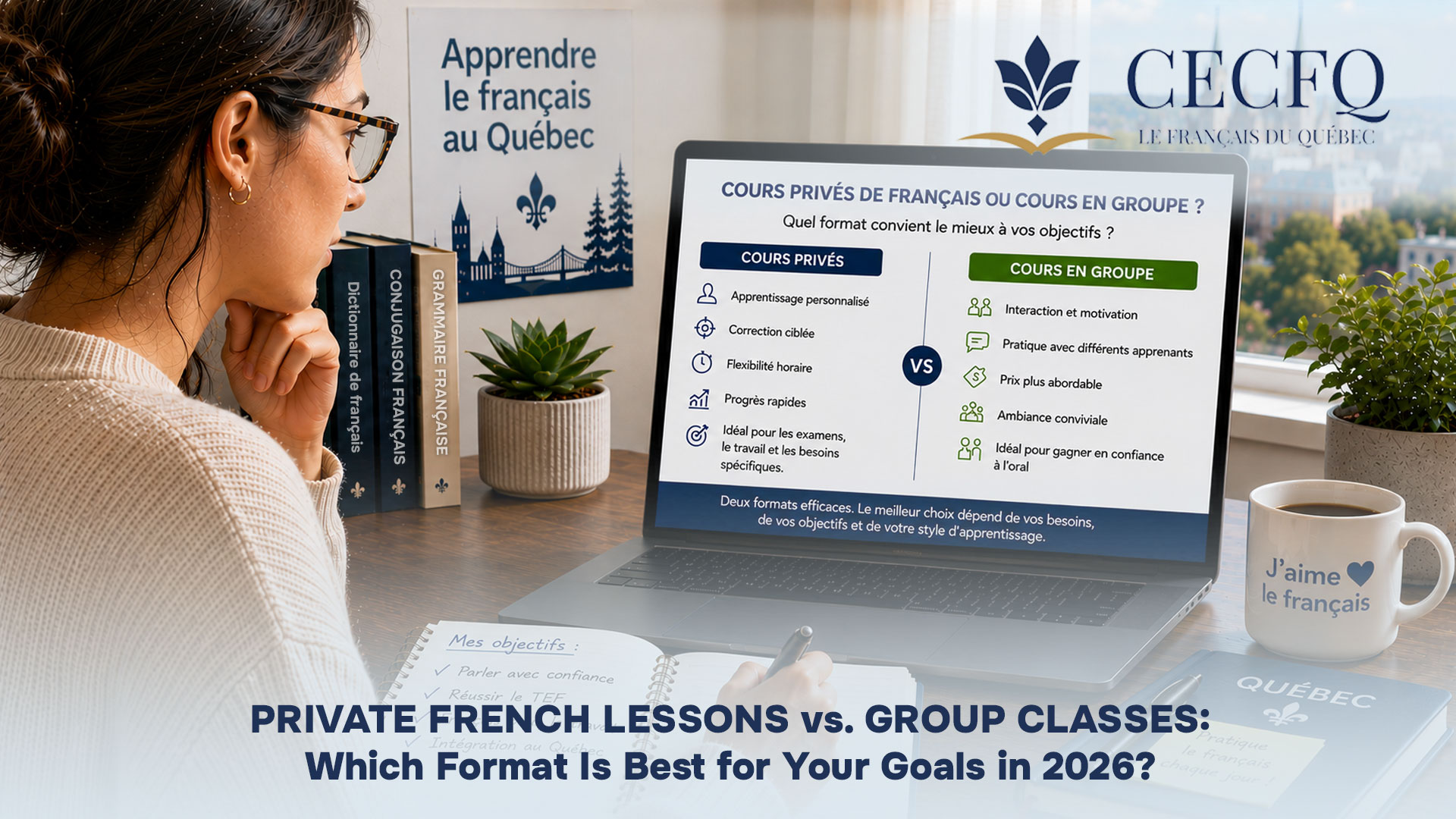
Learning outcomes improve drastically when your course format matches your personal needs. In 2026, Adult learners often progress faster when a course offers frequent exposure, active speaking time, and relevance to real-life tasks. These elements affect private lessons and group classes differently.
When learners ask which format is “better,” they often mean which leads to faster progress. Neither format is inherently superior; the better option is the one that supports your specific timeline and goals.
Private vs. Group Classes: Core Differences
Private French tutoring is often a strong choice for learners who need highly targeted progress. This includes professionals preparing for job interviews, immigrants needing rapid oral fluency for integration, and exam candidates under strict time pressure. The personalized structure allows the teacher to address your exact gaps – such as specific pronunciation issues, complex grammar, or role-playing for Quebec’s professional environment – without wasting time on content you already know.
Group French Courses, on the other hand, suit learners seeking routine, community, and gradual improvement. They are especially useful for general communication, confidence building, and maintaining motivation over several months. In a group, learners encounter diverse accents, hear others’ mistakes, and share speaking strategies. This exposure can significantly reduce speaking anxiety and foster a sense of shared progress.
| Goal | Private French Lessons | Group Classes |
| Fast exam preparation | Strong fit | Moderate fit |
| General conversation | Good fit | Strong fit |
| Personalized correction | Strong fit | Limited fit |
| Social motivation | Limited fit | Strong fit |
| Irregular schedule | Strong fit | Moderate fit |
Factors Influencing Your Progress Speed
For rapid movement toward a specific target, private lessons typically take the lead. For building steady, long-term communication habits, group classes can be very effective.
- Speaking Time and Correction:
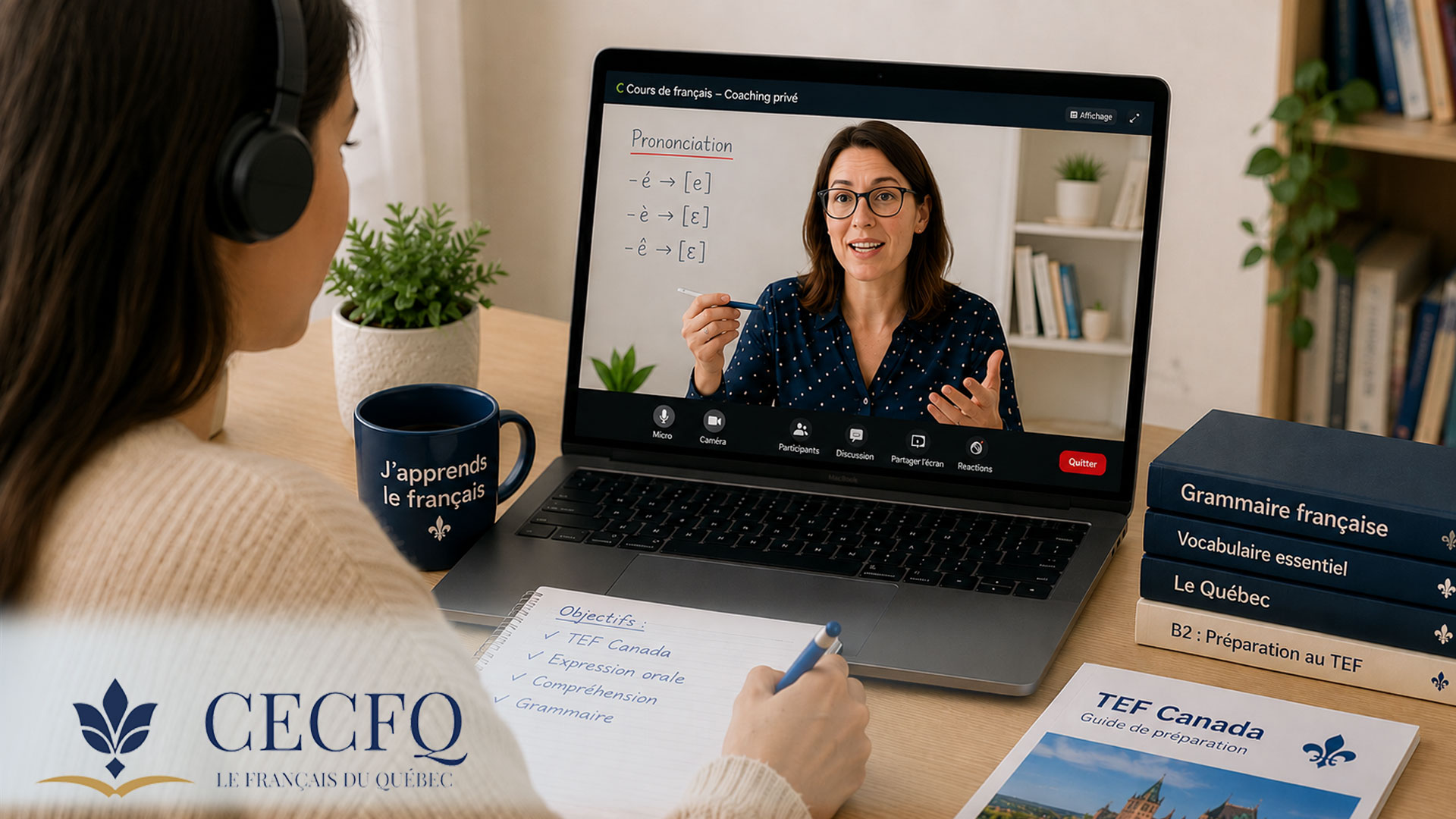
A significant difference is active speaking time per session. In private lessons, nearly all oral practice is yours, and a teacher can track recurring errors to design specific exercises. In group classes, speaking time is divided among participants, and corrections must be selective to keep the class moving.
- Accountability and Routine:
Some adults thrive with the consistency of scheduled group sessions, finding motivation in peer attendance. Others perform better with private lessons due to the stronger accountability that comes from personal, one-on-one attention. Ultimately, the most effective format is the one you will consistently attend.

Building Confidence: Overcoming the Fear of Speaking
Confidence is often the key to French learning success. Adult learners may know the grammar perfectly but hesitate to speak in real Quebec situations.
Private conversation practice is ideal for learners feeling blocked, embarrassed, or anxious. The one-to-one setting reduces pressure, allowing ample space to repeat, make mistakes, and ask questions freely.
Introverted learners might assume private lessons are the only suitable option. However, some thrive in small group classes, observing before participating.
Conversely, group classes help build confidence by normalizing mistakes. Hearing peers grapple with similar issues often makes introverted or self-conscious learners realize that perfection is not required for effective communication.
Workplace Communication
For employees learning French for meetings, customer service, or internal communication, the best format depends on specific tasks. Private lessons help with role-specific vocabulary and realistic simulations. Group classes are useful when multiple employees need shared training for common workplace communication needs.
| Confidence Need | Better Format | Why |
| Fear of speaking one-on-one | Private lessons | Safer, personalized environment |
| Fear of speaking in public | Group classes | Gradual exposure to others |
| Need pronunciation correction | Private lessons | More focused feedback |
| Need spontaneous interaction | Group classes | More varied exchanges |
Exam Preparation: Targeted Study Plans
The best exam format depends not only on how close your test date is, but also on your current skill profile. Some learners need urgent, targeted correction in one or two weak areas, while others benefit more from broader, steady practice before switching to intensive exam preparation.
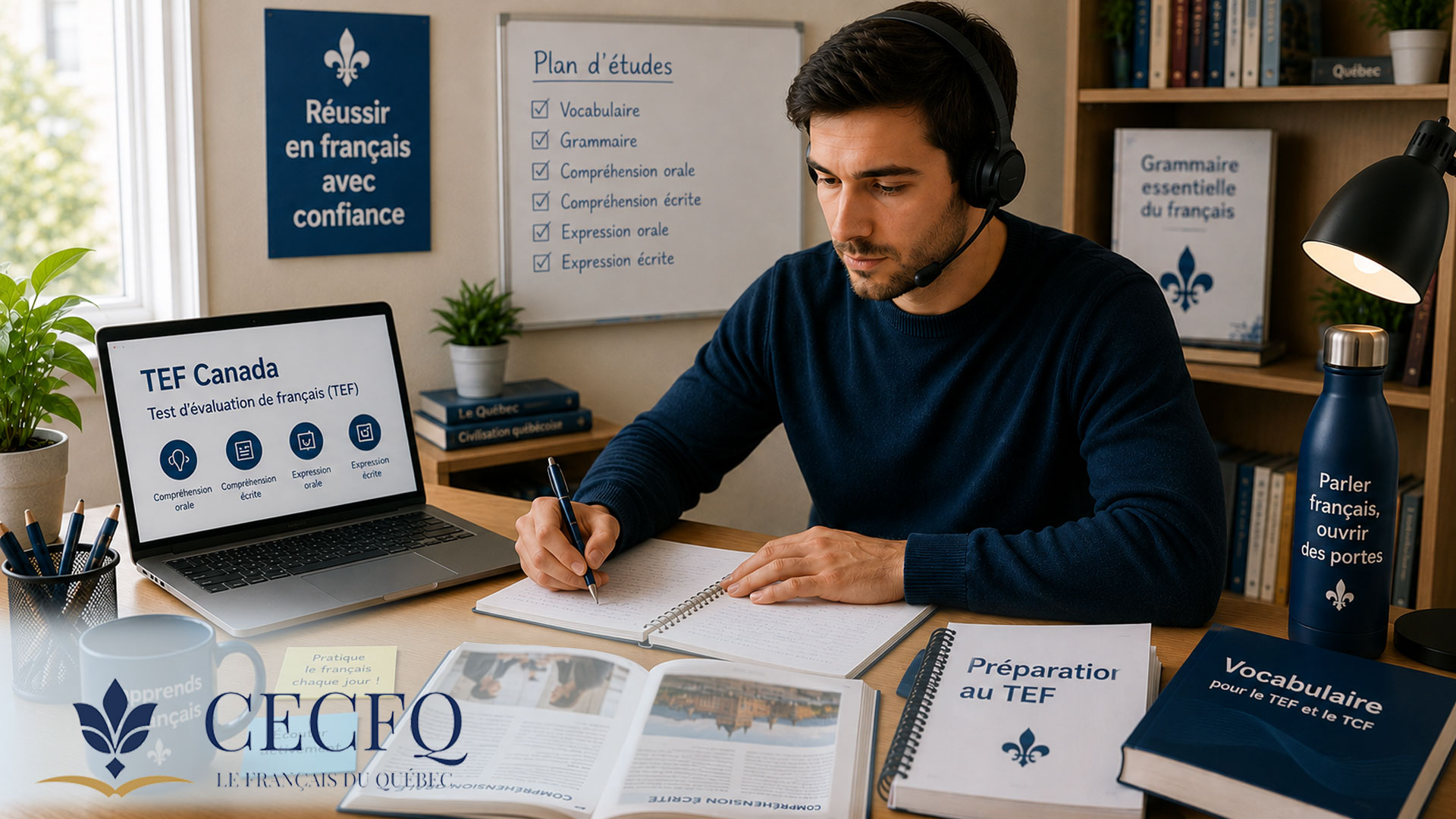
Exam preparation clearly highlights the functional differences between formats. For tests like the DELF, DALF, TCF, or TEF, learners often need precise work on timing, task types, scoring rubrics, and weak competencies (you can review the official TEF guidelines by Le français des affaires).
When Private Lessons Are Best for Exams:
- You have less than three months before the exam date.
- You need to improve one specific skill (like oral expression) urgently.
- You require deep, personalized feedback on writing structures.
- You need a specific minimum score tied to an immigration or professional deadline.
When Group Preparation Can Work:
- You are not in a rush and need a broad review rather than urgent score improvement.
- You benefit from hearing other candidates’ task responses and brainstorming together.
- You want regular, guided practice at a shared CEFR level before investing in intensive individual coaching.
Budget, Value, and the Hybrid Approach
Cost is a reality, but value is paramount. Group classes are often more affordable per hour, while private lessons require a higher upfront investment for individual attention. However, a lower price doesn’t guarantee better value if the format doesn’t align with your objective.
If your timeline is short, private lessons might be more cost-effective overall by reducing wasted time and getting you to your goal months faster. If your budget is constrained and your goal is long-term integration, group learning, or public options such as Francisation Québec where available, can be a sustainable choice.
The Hybrid Option
Many adult learners in Quebec find success with a hybrid approach. They attend group classes for regular practice, community, and social communication skills, while booking occasional private lessons for specific pronunciation drills, exam feedback, or work-specific tasks.
2 Real Cases: Finding the Right Fit
Case 1: Exam Deadline Under Pressure
An international professional in Quebec required a higher oral score on a recognized French exam within a short time frame. Group study had improved their general confidence, but persistent speaking errors went unaddressed. A switch to a private lesson plan focused strictly on oral structure, pronunciation, and timed responses. The learner improved efficiency and entered the exam with clearer strategies and stronger control.
Case 2: Integration Through Routine and Interaction
A newly arrived adult learner sought better everyday French for appointments, school communication, and daily life. Private lessons initially felt too intense and exhausting. A small group class provided a more comfortable rhythm, and guided conversation with peers reduced their speaking anxiety. Over time, the learner gained confidence in common Quebec communication situations without feeling overwhelmed.

FAQ
1. Are private French lessons better than group classes for beginners?
Not always. Beginners wanting highly personal support and flexible pacing may prefer private lessons. However, beginners who benefit from structured routine, repetition, and shared practice often thrive in group classes.
2. Which format is best for TEF or TCF preparation?
Private lessons are often a better fit when the exam date is near or a specific score is required urgently. Group classes are more suitable for general language preparation and foundation-building over a longer period.
3. Do group classes provide enough speaking practice?
They can, especially in small, interactive groups. However, private lessons inherently provide significantly more active speaking time per session since you are the only student.
4. Are private lessons worth the higher cost?
They offer excellent value if your goal is urgent, highly specific (like medical or engineering vocabulary), or requires deep correction. For long-term, general language maintenance, group classes often offer better financial value.
5. Can I combine private French lessons and group classes?
Yes. A hybrid approach is very popular among adult learners. You can use group classes for consistent weekly progress and book private lessons for targeted correction, exam strategy, or upcoming workplace presentations.
Ready to Accelerate Your French in Quebec?
Stop guessing which format will work best for you. Whether you need the intensive focus of private tutoring to ace an exam, or the supportive environment of a small group class to build daily confidence, CECFQ has a program tailored to your goals.
Book your Free Consultation today to review your timeline and learning needs with our pedagogical experts, and let us match you with the perfect French learning format!
Disclaimer: The recommendations in this article are based on general pedagogical trends in adult education as of June 2026. The ideal learning format depends highly on your personal schedule, budget, and starting level. For official immigration or academic language requirements, always verify the criteria with the relevant Quebec or Canadian authorities.