
Introduction
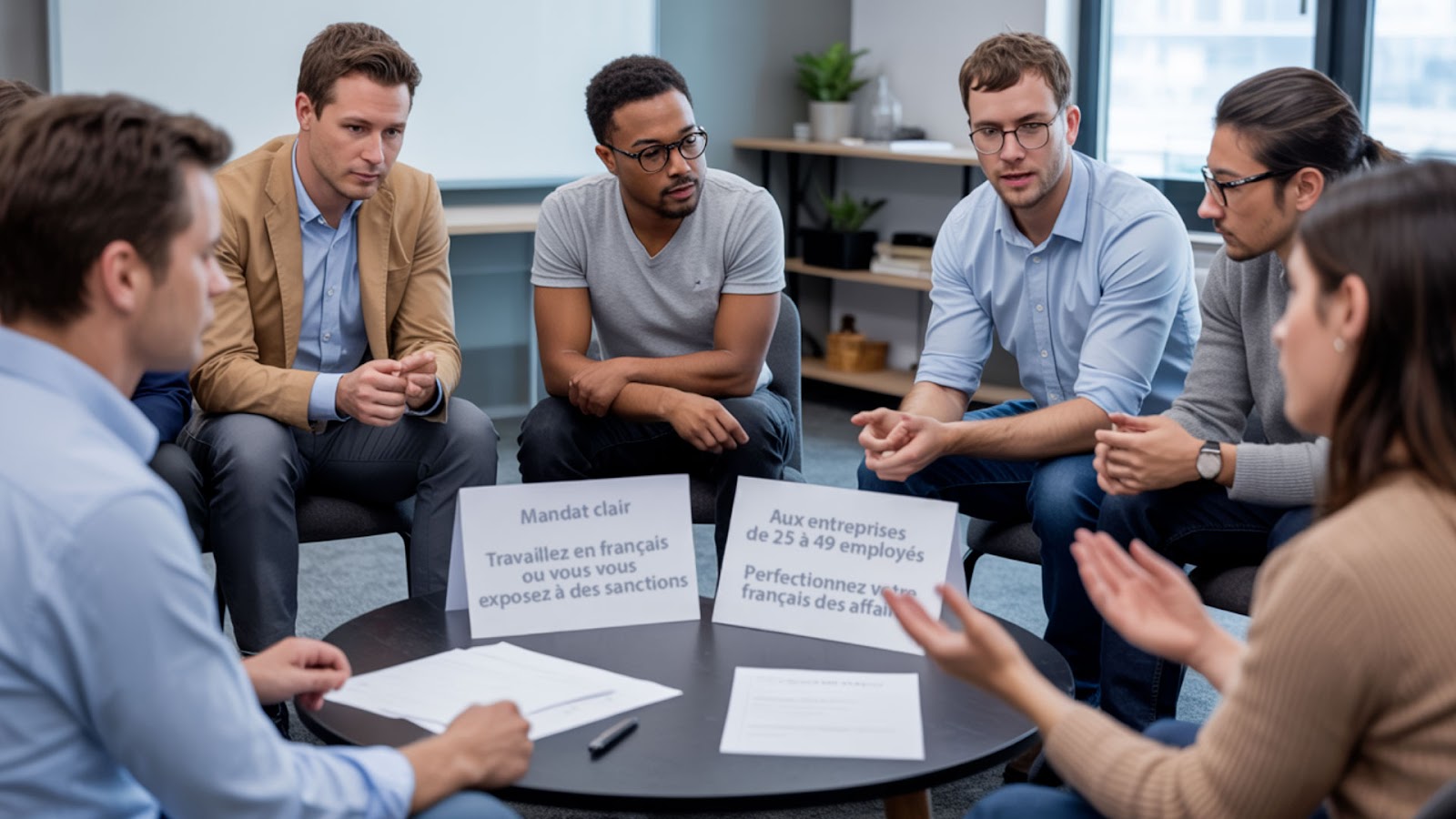
In Quebec’s current business landscape, French proficiency isn’t just a “nice-to-have” skill – it is a regulatory necessity and a key driver of operational efficiency. With the tightening of Bill 96 (Law 96) extending francization requirements to businesses with 25 to 49 employees, in addition to those already covered with 50+ employees, companies in 2026 face a clear mandate: work in French or face penalties.
However, many corporate programs fail because they rely on generic apps or irrelevant grammar drills. This guide outlines how to design, implement, and refine a Business French program that delivers measurable ROI and ensures OQLF compliance.
1. Designing a Results-Driven Program
Effective corporate training is not about “teaching French”; it is about solving business problems caused by language barriers.
In 2026, the most successful Quebec companies use a cyclical approach to training. Instead of signing employees up for indefinite classes, they follow a structured workflow.
The 3-Step Setup
- Diagnostic Audit: Don’t guess. Test employees to find their exact CEFR level (A1-C2).
- Role Mapping: Identify which roles actually need French. A warehouse manager needs different vocabulary than a legal compliance officer.
- KPI Definition: Set success metrics. For example: “Decrease reliance on translation for internal emails by 50% in 6 months.”
2. The “Hybrid” Standard for 2026
Post-pandemic work cultures in Montreal and Quebec City have permanently shifted to hybrid models. Training must reflect this.
Why “Video Library” Only Fails:
Passive watching yields low retention. Employees need active feedback.
The Winning Model:
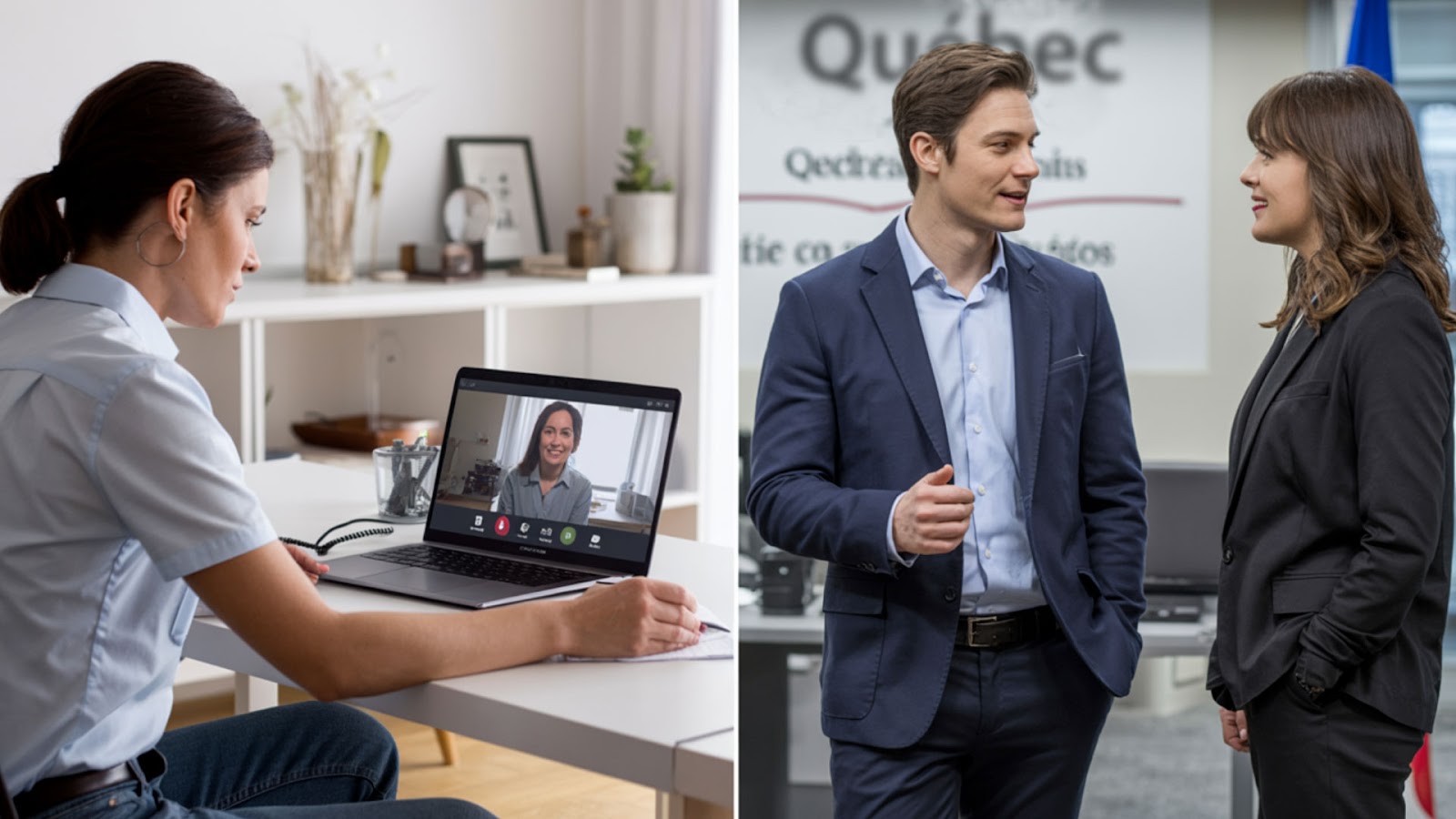
- Live Virtual Classes (Zoom/Teams): Small groups (max 4-6) for speaking practice.
- Asynchronous Micro-learning: 15-minute grammar or vocabulary modules completed on mobile.
- Workplace Application: Assignments that involve writing a real email or preparing a real meeting agenda.
3. Compliance: Bill 96 & OQLF Requirements
This is the most critical update for 2026.
Under Quebec’s Charter of the French Language, employees have the right to work in French. Companies must demonstrate that French is the normal and usual language of work and internal communication, as required by the Charter of the French Language.
How Training Helps Compliance:
- Documentation: Keeping records of employee French training acts as proof of your company’s effort to comply with OQLF standards.
- Management: Promoting staff to management requires them to have appropriate French knowledge. Targeting at least a strong B2–C1 level for executives is often necessary in practice to meet communication and compliance expectations.
4. Segmenting Training by Business Need
Generic “Intermediate French” classes are inefficient. Segment your teams based on their actual daily output.
| Need Type | Primary Skill | Recommended Training Focus | Success Indicator |
| Customer Service | Speaking/Listening | Role-play, script handling, de-escalation | Higher CSAT scores in French |
| Ops & IT | Reading/Writing | Ticket logging, technical documentation | Faster ticket resolution time |
| HR & Legal | Reading/Writing | OQLF forms, contracts, policy drafting | Zero compliance errors |
| Executives | Speaking (High-Level) | Media training, strategic presentations | Successful stakeholder meetings |
5. Benchmarks: Using Exams (TEF/TCF/DELF) as KPIs
Using vague terms like “fluent” causes confusion. In 2026, leading companies align internal goals with international standards like the CEFR (Common European Framework of Reference).
This provides a clear ladder for employee progression and helps HR make data-driven decisions on hiring and promotion.
| Level | Business Capability in Quebec |
| A2 | Basic: Can handle simple routine tasks and standard greetings. |
| B1 | Functional: Can write internal emails and manage predictable meetings. |
| B2 | Operational: Can negotiate, convince clients, and work autonomously. Target for most professionals. |
| C1 | Strategic: Can handle nuanced leadership communication and legal/regulatory contexts. |
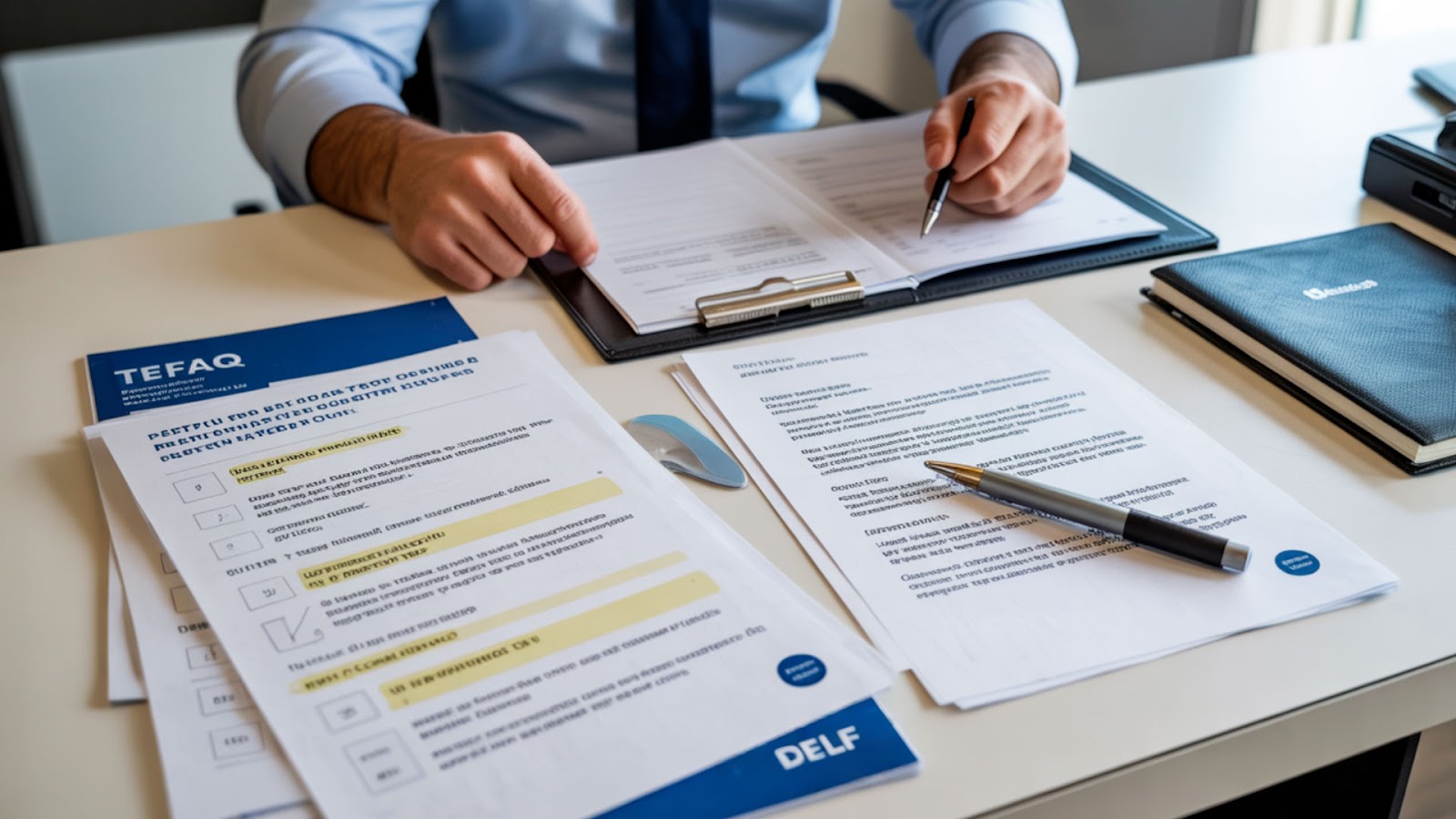
Pro Tip: For employees seeking permanent residence (PR), offer training aligned with TEFAQ or TCF Canada. Supporting their immigration journey is a massive retention tool.
6. Real-World Success Stories
Case A: The Call Centre Turnaround
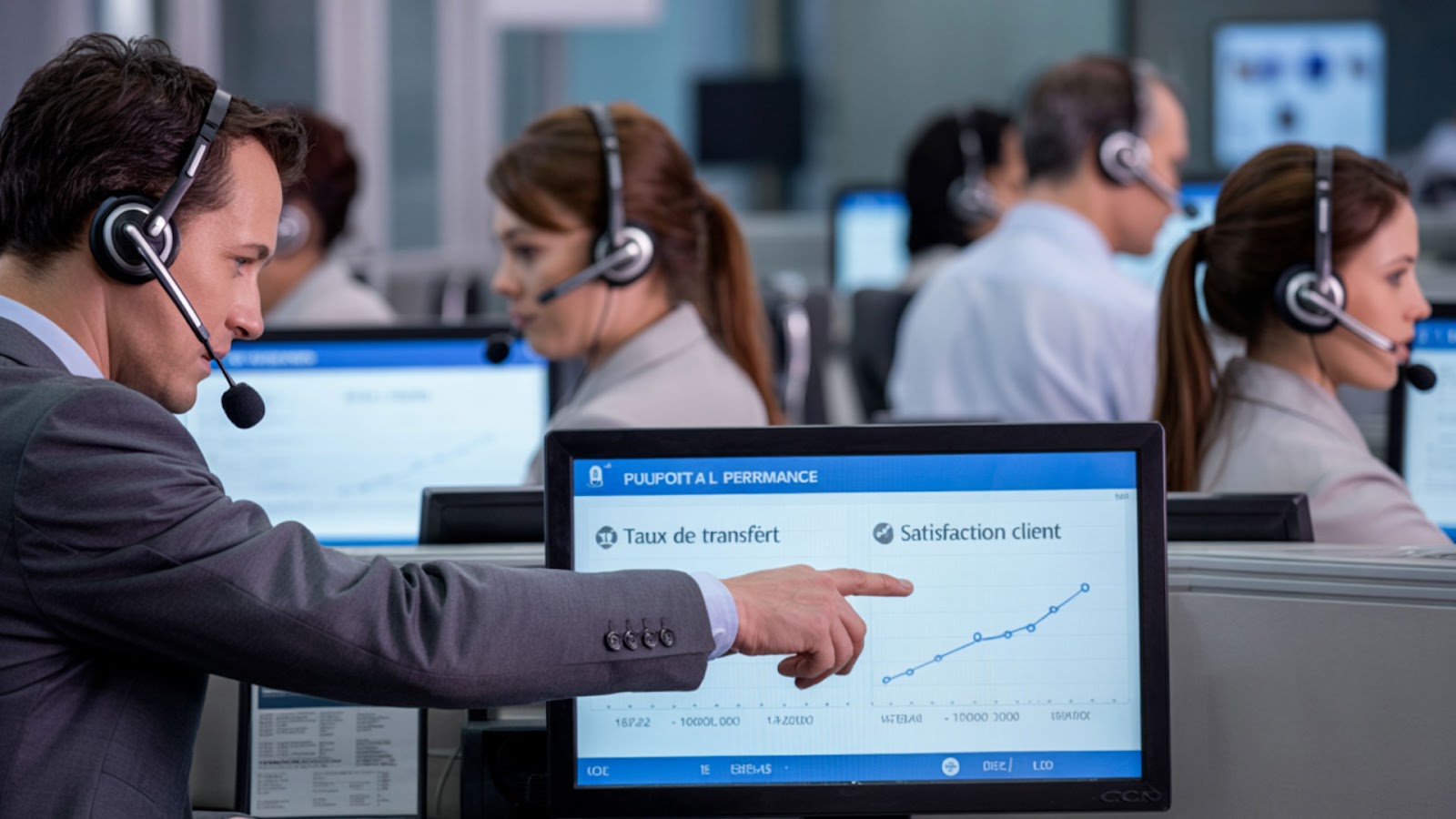
- Problem: High transfer rate of French calls to a small group of bilingual staff, causing burnout.
- Solution: A 6-month “Functional French” boot camp focusing only on call scripts and troubleshooting vocabulary (B1 level target).
- Result: 40% reduction in call transfers; 15% increase in employee retention.
Case B: The HQ Integration
- Problem: Tech company in Montreal had English-speaking specialized talent struggling to integrate socially and administratively.
- Solution: “Lunch & Learn” conversational groups mixed with formal A2/B1 structured courses.
- Result: Improved team cohesion and compliance with Francization certificate requirements.
FAQ
1. How long does it take to see results?
For an employee moving from A2 to B1 (functional independence), expect 3 to 6 months of consistent training (2-3 hours/week).
2. Is online training accepted for OQLF compliance?
Yes, as long as the training is structured, documented, and shows a genuine effort to francize the workplace. OQLF evaluates the overall linguistic situation and measures, not the specific format (online vs in‑person).
3. Should we pay for employees’ exams (TEFAQ/DELF)?
Yes. It is a relatively low-cost perk (often in the 250–350 CAD range, depending on the exam centre) that validates the training investment and motivates staff to study harder.
4. Where can we find recognized tests?
Use official centres for the TEF/TEFAQ or TCF Canada.
Build a Francophone Future for Your Company
Don’t let language barriers slow down your growth in Quebec. At CECFQ, we specialize in corporate audits and custom training plans that align with 2026 regulations.