

Yes, you can shorten the time needed to reach a usable French level. This requires realistic intensity, focused methods, and purposeful practice. This article synthesizes facts and guidance for accelerated learning.
Factors Influencing French Learning Speed
- Total guided learning hours – The most reliable benchmark is the number of *guided* hours (lessons + active practice).
- Weekly intensity – More hours per week compress calendar time, but the quality of those hours matters.
- Method mix – A balanced blend of speaking, listening, reading, and writing accelerates overall progress.
- Exam‑specific focus – Targeted preparation for TEF, TEFAQ, TCF Québec, DELF or DALF can shave off extra hours once a solid general level is reached.
Realistic French Proficiency Hour Ranges for Adults
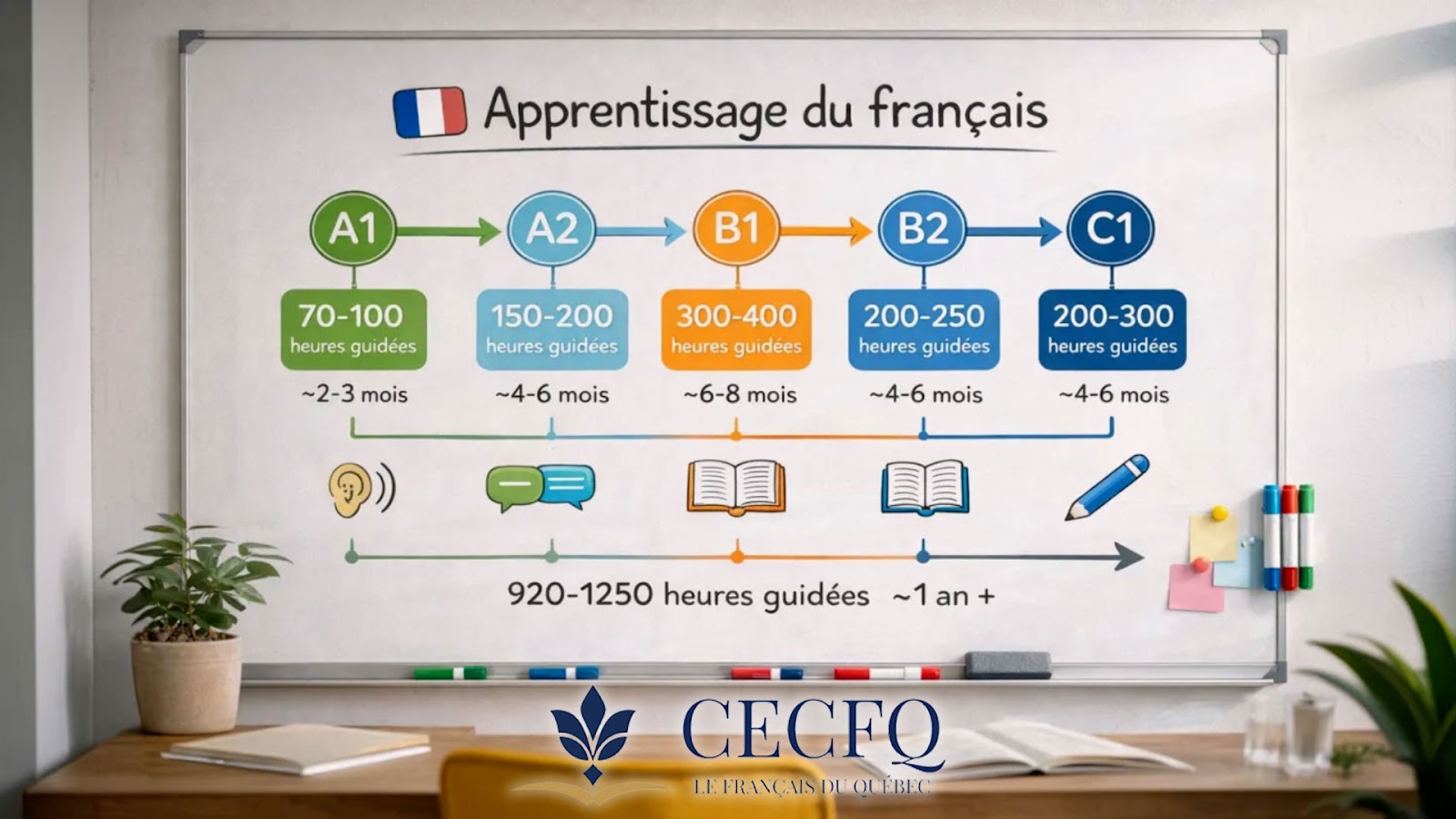
| CEFR level | Approx. guided hours | Typical calendar time at 3–6 hrs/week |
| A1 (survival) | 80–100 | 4–8 weeks (intensive) / 4–6 months |
| A2 (basic) | 180–250 total | 3–8 months |
| B1 (intermediate) | 350–450 total | 8–18 months |
| B2 (upper-intermediate) | 600–750 total | 1.5–3 years |
| C1 (advanced) | 900–1100+ total | 2.5–4+ years |
*If you can devote 5 hours per week, 600 guided hours translate to roughly 120 weeks (≈ 2 years).
**These figures are an average guideline. The actual speed depends greatly on the student's native language (for example, Spanish speakers learn French faster than speakers of Asian languages), knowledge of other foreign languages, and individual cognitive characteristics.
Debunking Common French Learning Speed Myths
- “Fluent in 30 days” – This is only possible with extreme immersion, requiring 8-10 hours of active daily study. For most adults, this intensity is unrealistic.
- “Only speaking matters” – While speaking boosts oral fluency, neglecting listening, reading, and writing creates gaps. These gaps can slow progress, particularly for exams and workplace tasks.
- “Immersion alone guarantees fast progress” – Living in a French-speaking environment often yields little improvement without intentional practice. Active immersion, involving conversation, role-plays, and real-world tasks, is essential.

Strategies to Accelerate Your French Learning
- Aim for 30‑40 % of weekly time as active speaking (role‑plays, simulated appointments, work‑meeting drills).
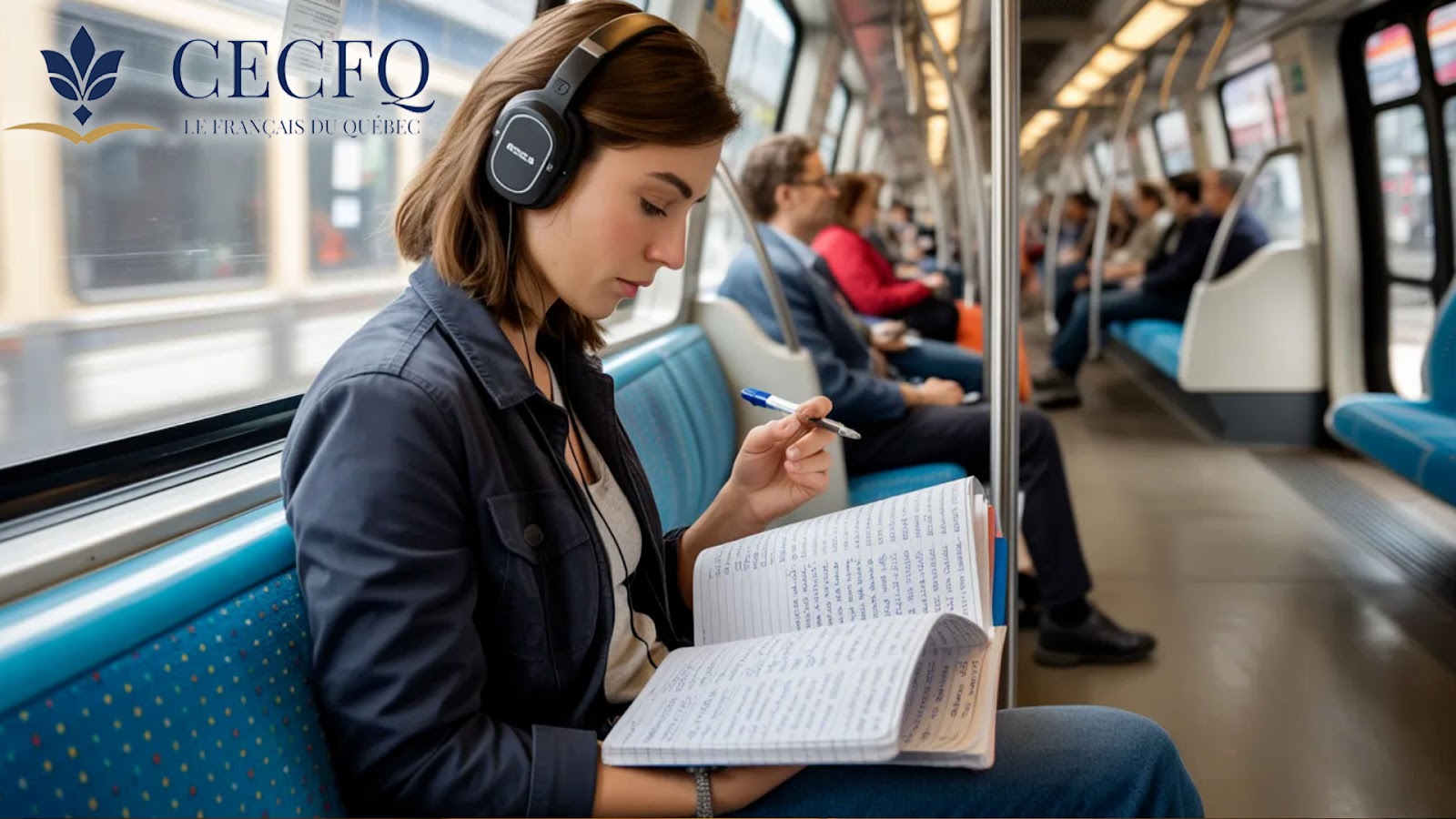
- Micro‑immersion – 4‑5 short (10‑15 min) activities each day (listening, flashcards, speaking aloud) can double total exposure without extra stress.
- Balanced split – 50 % structured lessons + 50 % free exposure (films, podcasts, chats) works for most learners; adjust to 60 %/40 % if you need more speaking practice.
- Exam‑focused blocks – Once you’re within half a CEFR level of your target, add 30‑80 hours of targeted exam prep (task‑type practice, timed writing, speaking simulations). At CECFQ, all exam preparation courses are taught by certified examiners, so your accelerated plan is aligned with real evaluation criteria.
Real-World French Learning Success Stories
- IT professional (A1 → B2 oral in 18 months) – 2 × 90‑min group classes + 1 × individual conversation + daily listening ≈ 6‑7 hrs/week; plus 50 hrs TEFAQ‑specific prep.
- Nurse (A2 → B1+/early B2 spoken in 10 months) – 3 × online medical‑scenario sessions (≈ 5 hrs/week) + daily 15‑min vocab/writing micro‑sessions.
Both examples show that structured weekly schedules combined with focused micro-practice lead to measurable progress, even alongside full-time work.
FAQ
How many hours do I need for a usable level of French?
A2/B1 typically needs 200‑400 guided hours → 8‑18 months at 4‑6 hrs/week.
Can I focus only on speaking to improve my French?
Speaking boosts oral fluency, but ignoring the other skills will hinder exam performance and professional communication.
Is it realistic to reach B2 in French in one year?
Only with 15‑25 hrs/week (full‑time study or intensive immersion). Most adults achieve B1 in that time; B2 usually follows in the second year.
Do language apps really reduce learning time?
Apps help with vocab and micro-practice but often plateau at A2/B1 without feedback and speaking. Combine apps with guided speaking for significant gains.
How many exam preparation hours do I need for TEF/TEFAQ or TCF or DELF/DALF?
If within half a level of the required CEFR, plan 30‑80 hours of focused exam prep. Larger gaps require full guided-hour totals plus extra preparation.
Our Key Recommendations for Efficient French Learning
- Set a realistic weekly hour target (3‑8 hrs for most adults).
- Structure those hours: 2‑3 hrs of guided lessons, 1‑2 hrs of active speaking, 1‑2 hrs of reading/listening, plus daily 10‑15 min micro‑sessions.
- Add a focused exam‑prep block (30‑80 hrs) once you’re at B1 level and need a specific score.
- Track progress against the CEFR hour ranges to stay on schedule.
Follow this evidence-based plan to achieve the French proficiency you need for Quebec immigration, work, or academic goals. Move from "myth" to "method" and avoid unrealistic promises.
Ready to map out a realistic French study plan for your Quebec goals?
Start by calculating your current weekly availability, choosing a mix of guided lessons and micro‑immersion, and setting a concrete CEFR level and target exam date. Commit to tracking your guided hours for the next 12 weeks and adjust intensity as needed to keep your immigration or professional timeline on track.